
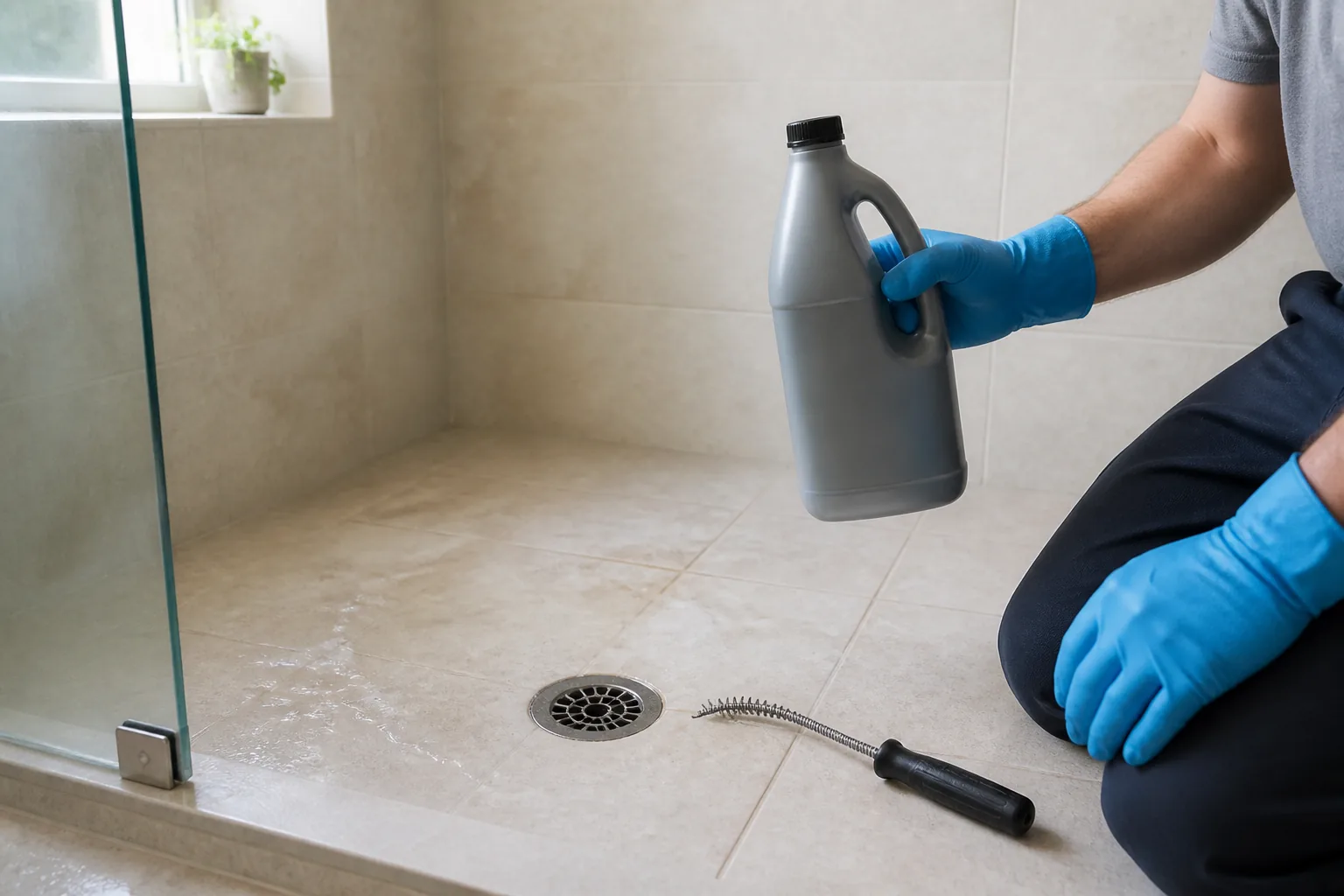
Is using a chemical to unclog a shower drain safe? Sometimes a chemical drain cleaner can break down certain shower clogs, but it is not the best first choice for every drain or every plumbing system. If you are using chemicals to unclog a shower drain, the label matters, the condition of the pipe matters, and the type of clog matters.
A slow shower drain is usually caused by hair, soap residue, conditioner, body oils, or mineral buildup. Chemical products are designed to react with some of that organic material, but they may not fully remove a thick hair clog or a deeper blockage in the drain line. Repeated use, mixing products, using chemicals on a complete blockage, or pouring cleaner into older or damaged plumbing can create safety and plumbing concerns.
If your shower keeps backing up, drains slowly again after a short time, or you are not sure what has already been poured into the drain, Derek Sawyer’s Heating, Air & Plumbing can help with professional drain cleaning in Modesto and nearby Central Valley communities.
Quick Answer: Is Drano Safe for a Shower Drain?
Chemical drain cleaners may dissolve some hair, soap residue, and organic buildup in a shower drain, but they are not right for every clog. Repeated use, older pipes, complete blockages, standing chemicals, or mixing products can create risk. Always follow the manufacturer’s directions, and call a plumber if the clog is recurring, severe, or unknown.
That balanced answer is important. Not every properly used drain-cleaning product instantly ruins plumbing, but chemical cleaners are also not a cure-all. A shower drain clog is a physical obstruction first. The safer question is not only, “Can this product go down the drain?” It is, “What is causing the blockage, and what is the least risky way to remove it?”
What Usually Clogs a Shower Drain?
Most shower clogs build slowly. Water begins to pool around your feet, then the drain clears after a few minutes, and eventually the shower may stop draining well at all. The usual materials include:
- Hair from regular shower use
- Soap residue and body wash film
- Shampoo and conditioner buildup
- Skin oils and small debris
- Mineral buildup from hard water
- Foreign objects, such as bottle caps or small plastic pieces
- Deeper buildup farther down the drain line
Hair and soap residue are the classic shower-drain combination. Hair catches on the stopper, drain crossbars, or rough spots in the pipe. Soap scum, conditioner, and oils then bind to it. Over time, that sticky mass grabs more hair and narrows the drain opening.
That is why a drain cleaner may seem to help for a few days but not solve the problem. If the product opens a small channel through the clog without removing the hair mass, the drain can slow down again quickly.
How Does Drano Work?
How does Drano work? Drano and other chemical drain cleaners use chemical reactions to break down certain clog materials. Depending on the product, the cleaner may be caustic, oxidizing, or formulated in another way to attack organic buildup. Some reactions generate heat, which can help loosen soap residue and soft materials, but not every clog responds the same way.
Different drain-cleaner products are not all identical, so the safest guidance is to read the current product label and use only the product as directed. In general, chemical drain cleaners try to:
- Break down hair, soap residue, and other organic material
- Loosen buildup from the inside of the drain
- Create a path for water to move through the clog
- Use density or gel consistency to reach standing water in some situations
The limitation is simple: a chemical reaction cannot identify the real cause of the clog. A small soap-and-hair obstruction near the drain opening may respond differently than a compacted hair mass, a blocked stopper assembly, a foreign object, a sagging pipe, or buildup farther down the line.
Why Chemical Drain Cleaners Can Be Risky
Chemical drain cleaners deserve caution because they are strong products used in a confined plumbing system. The risk depends on the product, the drain, the pipe condition, how often the product is used, and whether the clog is partial or complete.
Heat and Pipe Condition
Some drain-cleaning reactions generate heat. In a healthy drain used according to the label, that may be part of how the product works. But if the pipe is old, weakened, already leaking, improperly installed, or blocked tightly enough that the chemical cannot move, the situation becomes less predictable.
Heat, standing chemical, and existing pipe problems are a poor combination. That is why repeated chemical use should not replace proper diagnosis when a shower drain keeps clogging.
Older or Damaged Plumbing
Older homes may have piping that has corrosion, scale, brittle joints, previous repairs, or unknown material transitions. Even newer plumbing can have problems if the pipe is already compromised. If you suspect a leak, damaged drain line, loose connection, or past plumbing issue, be cautious with chemical products.
This does not mean a specific product always destroys a specific pipe material. It means the condition of the plumbing changes the risk.
Chemicals Sitting Behind a Complete Clog
If the shower drain is completely blocked, chemical cleaner can sit above the clog instead of moving through the line. That can leave standing chemical in the tub or shower, increase splash risk, and make the plumber’s job more hazardous if professional tools are needed later.
If you have already used a chemical cleaner and the drain is still blocked, tell the plumber what product was used. That helps the technician choose the safest next step.
Personal Safety
Drain cleaners can irritate or injure skin and eyes, and fumes or splashing can be a concern in small bathrooms. Follow the product label for ventilation, protective precautions, timing, flushing, and compatibility. Keep children and pets away from the area while the product is being used.
Never Mix Drain-Cleaning Chemicals
Never mix drain-cleaning products or combine them with other household chemicals. Do not mix different drain cleaners, drain cleaner and bleach, drain cleaner and acids, drain cleaner and ammonia, or drain cleaner with any other cleaning product. Mixing chemicals can create dangerous reactions and fumes.
If one product did not clear the drain, do not pour another product in after it. Stop and get the drain assessed.
Can Drano Damage Your Pipes?
Can Drano damage pipes? It can contribute to problems in the wrong circumstances, especially if it is used repeatedly, used incorrectly, left sitting behind a complete clog, or poured into plumbing that is already deteriorated or damaged. The risk depends on the product, pipe material, pipe age, frequency of use, and the type of blockage.
That is a more useful answer than saying every chemical cleaner always ruins pipes. A single use according to the manufacturer’s directions is different from relying on chemicals every month for the same clog. Recurring clogs usually point to a physical buildup or drain-line issue that needs to be removed, not repeatedly softened.
What Is the Best Chemical for Unclogging a Shower Drain?
The best chemical for unclogging a shower drain is not simply the strongest bottle on the shelf. The right approach depends on what is clogging the drain, whether water still moves, what the product label allows, and whether the plumbing condition is known.
For a hair clog near the drain opening, mechanical removal is often a better first step than a chemical cleaner. Removing visible hair, cleaning the stopper, or using a simple hair-removal tool attacks the obstruction directly. If you do use a commercial drain cleaner, verify that it is labeled for the drain and plumbing conditions you have, follow the directions exactly, use appropriate protective precautions, and never mix it with other products.
Skip chemical cleaners when the shower is completely blocked, when the clog keeps returning, when multiple drains are slow, or when you do not know what was previously poured into the drain.
What Do Plumbers Recommend Instead of Drano?
Plumbers usually recommend identifying and removing the clog instead of repeatedly trying to dissolve it. For a shower drain, that often means starting with safe mechanical steps and moving to professional drain cleaning when the clog is deeper, recurring, or severe.
Remove Visible Hair
If hair is visible at the drain opening and you can remove it safely, pull it out and throw it away. Wear gloves. Do not force tools into the drain if the cover or stopper will not come out easily.
Clean the Drain Stopper
Hair and residue often collect around the stopper assembly. Cleaning that area can make a noticeable difference if the clog is close to the surface. If the stopper is complicated, corroded, or stuck, leave it alone and call for help rather than damaging the trim.
Use a Plunger Where Appropriate
A plunger may help with some shower clogs if there is enough water to form a seal and the drain setup allows it. Use gentle, controlled pressure. Stop if water backs up elsewhere or the drain does not improve.
Use a Drain Snake or Hair-Removal Tool
A small hair-removal tool or hand snake can physically pull out the clog instead of trying to chemically dissolve it. This is often helpful for hair and soap buildup near the drain opening. Avoid aggressive force, and do not use professional equipment unless you are trained to do so.
Call for Professional Drain Cleaning
If the clog is deeper in the line, keeps returning, or affects more than one fixture, professional equipment can clear the blockage more thoroughly. Derek Sawyer’s drain cleaning service can help diagnose whether the problem is near the shower, farther down the branch line, or connected to a larger plumbing issue.
Consider Hydro Jetting for Deeper Buildup
Hydro jetting is not the answer for every shower clog. For stubborn buildup deeper in a drain or sewer line, though, hydrojet drain cleaning may be appropriate after the plumbing is evaluated.
What Can I Pour Down My Shower Drain to Make It Drain Faster?
If the drain is only mildly slow, warm water may help move some soap residue, but it will not remove a substantial hair blockage. Avoid pouring repeated products into the drain without knowing what is causing the clog. The better first step is to remove visible hair and buildup when possible.
Be careful with common DIY advice. Baking soda and vinegar may foam, but that foaming action is not the same as professional drain cleaning and should not be treated as a guaranteed clog remover. Boiling water can also create unnecessary risk for some plumbing materials or fixtures, so do not assume hotter is always better.
If water is standing in the shower, the drain smells like sewer gas, or the clog returns quickly, stop pouring products into the drain and look for the cause.
What Do Plumbers Recommend to Unclog Drains?
Plumbers choose a drain-cleaning method based on the location of the blockage, the type of clog, the severity, the pipe condition, and whether multiple fixtures are affected. A simple shower hair clog may call for mechanical removal. A deeper or recurring blockage may require inspection, professional snaking, or another method.
Common professional steps may include:
- Inspecting the affected fixture and nearby drains
- Determining whether the blockage is local or deeper in the line
- Using professional drain-snaking equipment when appropriate
- Testing flow after the clog is cleared
- Recommending camera inspection if a deeper or recurring issue is suspected
- Using hydro jetting only when the pipe condition and clog type make it appropriate
Not every clogged shower needs every tool. Good drain service starts with diagnosis.
Signs You Should Skip the Chemical Cleaner
Skip the chemical cleaner and get the drain checked if:
- The shower drain is completely blocked
- The clog keeps coming back
- Several drains are slow at the same time
- Water backs up into another fixture
- You hear gurgling from drains or toilets
- There is a sewer odor in the bathroom
- You suspect old, damaged, or leaking pipes
- You already used another chemical product
- You do not know what was previously poured into the drain
- You think the issue may be in a main drain or sewer line
Those signs point beyond a one-time surface clog. If sewage is backing up, multiple fixtures are affected, or you have an urgent leak or overflow, Derek Sawyer’s also provides emergency plumbing service.
Why Does My Shower Drain Keep Clogging?
A shower drain that keeps clogging usually means the underlying material was never fully removed or there is a condition that helps buildup return. Hair may be collecting around the drain cover. Soap and conditioner may be binding to rough buildup inside the pipe. Hard water minerals can narrow the drain over time. A poorly draining line can also let residue settle instead of washing away.
Recurring clogs can also point to a deeper partial blockage. If other bathroom fixtures are slow, if a toilet gurgles when the shower drains, or if water backs up elsewhere, the problem may not be limited to the shower drain.
For homeowners in Modesto, Stockton, Manteca, Tracy, Turlock, Lodi, Ceres, Merced, and nearby Central Valley communities, a recurring slow shower drain is a good reason to schedule service. Derek Sawyer’s can inspect the symptoms, clear the blockage, and recommend the right next step without turning every clog into a major repair.
When Should I Call a Plumber for a Clogged Shower Drain?
Call a plumber for a clogged shower drain when simple, safe steps do not work, the clog comes back quickly, the drain is completely blocked, multiple fixtures are affected, or chemical cleaner is already sitting in the drain. You should also call if you notice sewage backup, sewer odor, gurgling, suspected pipe damage, or recurring slow drainage.
A plumber can determine whether the clog is close to the shower or farther down the plumbing system. That matters because the right fix for a hair clog near the drain is different from the right fix for a deeper drain-line obstruction.
How Derek Sawyer’s Can Help
If your shower keeps draining slowly or the clog keeps returning, Derek Sawyer’s Heating, Air & Plumbing can help diagnose the blockage and recommend the appropriate drain-cleaning method. Our plumbing team serves Modesto and surrounding Central Valley communities with practical drain solutions for slow drains, clogged drains, and urgent plumbing problems.
Instead of repeatedly pouring chemicals into a drain that may have a deeper issue, schedule service and get the clog properly evaluated. For shower clogs, recurring backups, or drains that will not clear, contact Derek Sawyer’s for clogged drain service.