
Quick Answer
Yes, air purifiers do work, but only when they are matched to the right problem. A good air purifier can reduce airborne particles such as dust, pollen, pet dander, and smoke particles. It will not fix every indoor air quality issue by itself. For the best results, homeowners should combine the right air cleaner with proper HVAC filtration, source control, ventilation, humidity control, duct care, and regular system maintenance. For professional help, learn more about our indoor air quality services. Keeping your filtration and airflow systems working properly also depends on preventive HVAC maintenance. For professional help, learn more about our residential air conditioning services.
Do Air Purifiers Actually Work?
If you are asking, “Do air purifiers actually work,” the honest answer is yes, within limits. Air purifiers move indoor air through a filter or cleaning technology, capture certain airborne contaminants, and send cleaner air back into the room or HVAC system.
The key phrase is certain airborne contaminants. Air purifiers are most useful for particles floating in the air, especially fine particles that can be pulled through a filter. They are less useful for pollutants that have already settled on floors, furniture, bedding, duct surfaces, or carpets. They also cannot correct moisture problems, stop active mold growth, repair leaky ductwork, or replace a neglected HVAC filter.
For Central Valley homes, an air purifier may be helpful during dusty weather, high pollen periods, wildfire smoke events, or times when the HVAC system runs heavily. The right solution depends on the size of the home, the specific air quality concern, the existing HVAC system, and how consistently the equipment is used and maintained.
How Does an Air Cleaner Work?
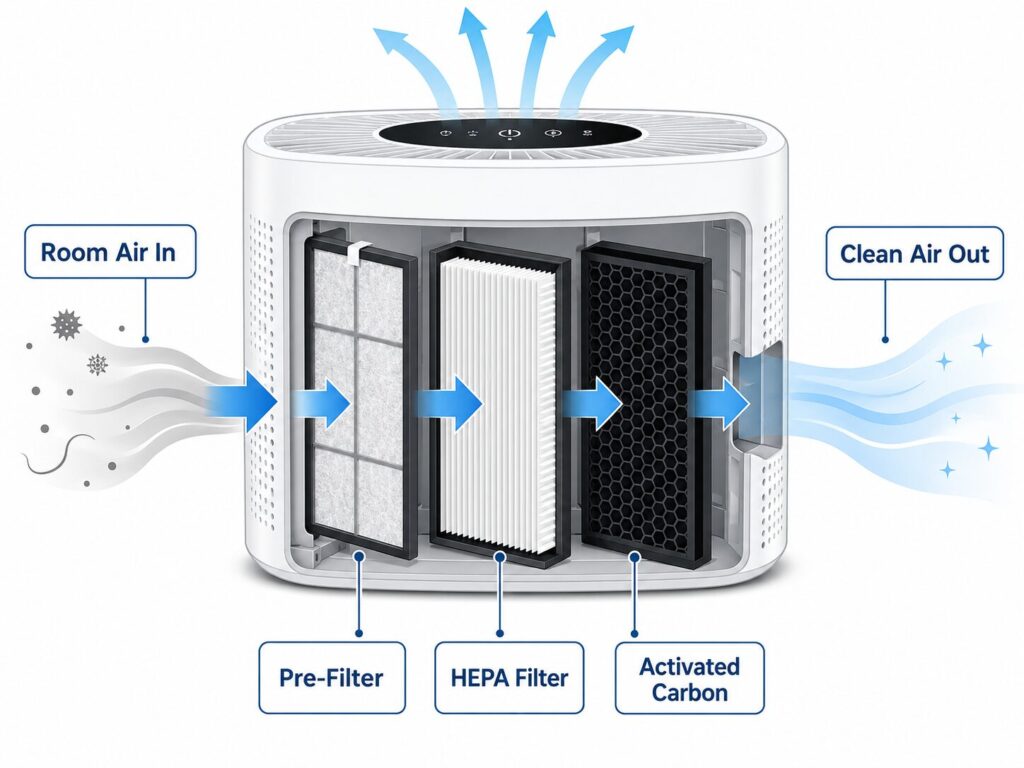
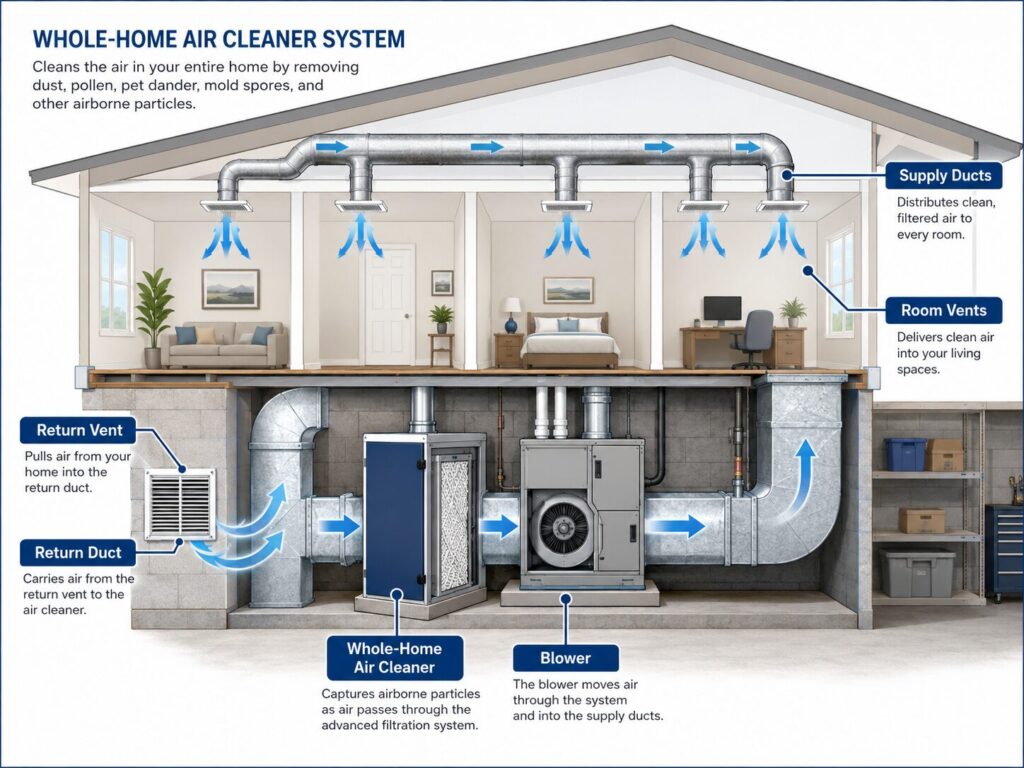
An air cleaner works by moving air through one or more filtration stages. Most portable air purifiers use a fan to pull air from the room, push that air through filters, and return filtered air back into the space. Whole-home air cleaners work with the central HVAC system so air is filtered as it moves through the return and supply ductwork.
The most common filtration stages include:
- Pre-filter: Captures larger debris such as lint, hair, and visible dust.
- HEPA or high-efficiency particle filter: Captures many small airborne particles, including dust, pollen, smoke particles, and pet dander.
- Activated carbon: Helps reduce some odors and certain gases or VOCs, depending on the carbon amount and product design.
- UV light: May help reduce microbial growth on certain HVAC components, but it is not a replacement for filtration or cleaning.
A purifier’s real-world performance depends on airflow, filter efficiency, room size, placement, runtime, maintenance, and how much pollution is being produced inside the home. A small purifier in a large open room may not move enough air to make a noticeable difference. A high-quality unit with the right clean air delivery rate, running consistently in a properly sized space, has a much better chance of helping.
What Air Purifiers Help With
Air purifiers can be useful for several common indoor air quality concerns.
Dust: A purifier can reduce airborne dust, especially fine dust that stays suspended long enough to reach the filter. It will not eliminate dusting because heavier particles settle on surfaces.
Pollen: During allergy season, filtration can help reduce pollen that enters the home through doors, windows, pets, clothing, or leaky ducts.
Pet dander: Air cleaners can capture some airborne pet dander. They work best when combined with cleaning, grooming, HVAC filter changes, and keeping return vents unobstructed.
Wildfire smoke particles: High-efficiency filtration can help reduce fine smoke particles indoors when doors and windows are kept closed. Central Valley homeowners may benefit from a strategy that includes a properly selected portable purifier, upgraded HVAC filtration when compatible, and a well-maintained HVAC system.
Cooking odors and some gases: Activated carbon can help with some odors and gases, but carbon performance varies widely by product. A basic particle filter alone is not designed to remove VOCs or odors.
General stale air: A purifier may make a room feel fresher, but stale air may also point to poor ventilation, dirty filters, duct issues, or moisture problems.
What Air Purifiers Do Not Fix
An air purifier is not a magic box. It should not be used as the only answer to every indoor air problem.
Air purifiers do not remove pollutants that have already settled on furniture, floors, bedding, or duct surfaces. They do not stop pollutants at the source. They do not solve high humidity, water leaks, active mold growth, sewer odors, combustion problems, carbon monoxide risks, or a failing HVAC system. They also do not replace professional medical advice for asthma, allergies, or respiratory symptoms.
For example, if a home has a musty smell because of a water leak or mold growth, filtration may reduce some airborne particles, but the moisture source still needs to be found and corrected. If a home has dusty airflow because of leaky return ducts, disconnected ductwork, or neglected maintenance, a portable purifier may help one room while the larger HVAC issue continues.
Portable Air Purifier vs. Whole-Home Air Cleaner
A portable purifier is usually designed for one room. It can be a good choice for a bedroom, nursery, home office, or living room where someone wants targeted filtration. The downside is that it only helps the room where it is located, and it requires filter changes, proper placement, and regular runtime.
A whole-home air cleaner is installed into or alongside the HVAC system. It can help clean air as the system circulates air through the home. This option may be more convenient for homeowners who want a broader solution, but it must be selected carefully so it does not restrict airflow or create problems for the heating and cooling equipment.
Many homes benefit from a layered approach: a compatible high-efficiency HVAC filter or whole-home air cleaner for the central system, plus a portable purifier in a bedroom or high-priority room during heavy pollen, dust, or smoke periods.
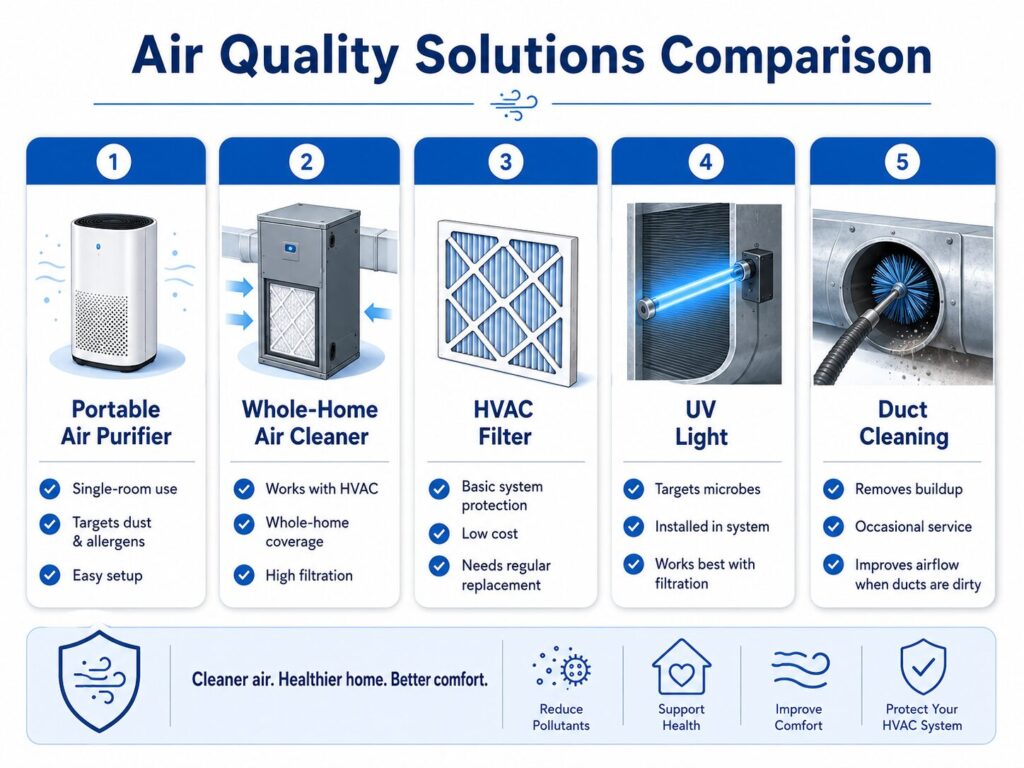
Comparison: Indoor Air Quality Options
| Option | Best for | Limitations | Maintenance | Derek Sawyer’s Cooling, Heating & Plumbing angle |
| Portable air purifier | One-room particle reduction | Does not clean the whole home | Replace filters as directed | Good for bedrooms and targeted smoke/pollen support |
| Whole-home air cleaner | Central HVAC filtration | Must be compatible with system airflow | Professional service and filter changes | HVAC pro can evaluate fit and installation |
| Upgraded HVAC filter | System-wide filtration when blower runs | Higher MERV can restrict airflow if incompatible | Change regularly | Ask technician about MERV 13 compatibility |
| UV light | Coil surface microbial growth support | Not a standalone particle filter | Bulb replacement and inspection | Useful as part of IAQ plan, not a cure-all |
| Duct cleaning | Built-up debris in duct system | Not a substitute for filtration or source control | As needed after inspection | Relevant when dust/debris is inside ductwork |
Are Air Purifiers Worth It?
Air purifiers are worth it when they solve a specific problem and are sized correctly. They are most likely to be worth the cost if someone in the home is bothered by airborne dust, pollen, pet dander, or smoke particles; if the home has a room that needs extra filtration; or if outdoor air quality regularly affects indoor comfort.
They may not be worth it if the real issue is a dirty HVAC system, a clogged filter, poor duct sealing, moisture damage, mold growth, or lack of maintenance. In those cases, the purifier may make a small difference while the root problem continues.
Before buying equipment, ask these questions:
- What pollutant am I trying to reduce?
- Is the concern in one room or throughout the whole home?
- Is my current HVAC filter clean and properly installed?
- Can my HVAC system handle a higher-efficiency filter?
- Do I need particle filtration, odor control, or both?
- Is there a moisture, duct, or ventilation issue that should be corrected first?
For many homeowners, the best value comes from having the HVAC system inspected first, then choosing a purifier or whole-home air cleaner that fits the home instead of guessing.
What to Look for Before Buying an Air Purifier
Look for the right size. Match the air purifier to the square footage of the room. Bigger rooms need more airflow.
Check CADR. Clean Air Delivery Rate helps show how quickly the unit can deliver filtered air. Higher CADR is usually better for larger rooms or heavier particle loads.
Choose the right filter. For particles, look for a true HEPA or high-efficiency particle filter. For odors or some gases, look for meaningful activated carbon, not just a thin deodorizing layer.
Think about noise. A purifier that is too loud may not get used consistently. Since runtime matters, choose a unit you can live with.
Understand filter cost. A cheap purifier can become expensive if replacement filters are costly or hard to find.
Avoid ozone-producing equipment for occupied living spaces. Some electronic air cleaners can produce ozone or other byproducts. Homeowners should be cautious and choose equipment designed for safe residential use.
Central Valley Indoor Air Quality Considerations
Homes in Modesto, Stockton, and the Central Valley face a mix of indoor air challenges. Dust, agricultural particles, pollen, wildfire smoke, pet dander, and heavy HVAC use can all affect comfort. During hot weather, homes are often closed up while the air conditioner runs for long periods. During smoke events, homeowners may close windows and rely heavily on filtration.
That makes the HVAC system a major part of the indoor air quality plan. If the return side of the system is leaky, the filter slot is not sealed, the filter is the wrong size, or the blower and coil are dirty, air quality and comfort can suffer. A portable purifier can help a room, but the central system still needs to move air safely and efficiently.
A professional HVAC technician can check filter compatibility, airflow, duct condition, coil cleanliness, return leaks, and maintenance needs. This is especially important before installing a restrictive high-efficiency filter or whole-home air cleaner.
When to Call an HVAC Professional
Call an HVAC professional if you notice heavy dust around vents, weak airflow, unusual odors when the system runs, recurring filter problems, hot and cold rooms, visible duct debris, musty smells, or indoor air that feels stale even with clean filters.
You should also schedule service before adding a high-MERV filter if you are not sure your system can handle it. Too much restriction can reduce airflow and cause comfort, efficiency, or equipment problems.
Derek Sawyer’s Cooling, Heating & Plumbing can help homeowners look beyond the box on the shelf and decide whether the better answer is a portable purifier, a whole-home air cleaner, duct cleaning, HVAC maintenance, filtration upgrades, or system repairs.
So, Do Air Purifiers Work?
Do air purifiers work? Yes, when the purifier is the right size, uses the right filter, runs long enough, and targets airborne particles it is designed to capture. They can be a smart part of an indoor air quality plan, especially for dust, pollen, pet dander, and smoke particles.
They are not a replacement for cleaning, ventilation, humidity control, duct care, HVAC maintenance, or fixing the source of the problem. The best results usually come from a layered plan: reduce the pollutant source, keep the HVAC system maintained, use compatible filtration, and add room or whole-home air cleaning where it makes sense.
If you are not sure whether an air purifier is worth it for your home, Derek Sawyer’s Cooling, Heating & Plumbing can help you evaluate your HVAC system and indoor air quality options.
Schedule Indoor Air Quality Service
If dust, pollen, odors, smoke, or stale indoor air are affecting your comfort, contact Derek Sawyer’s Cooling, Heating & Plumbing to schedule service. Our team can inspect your HVAC system, review filtration options, evaluate ductwork, and help you choose the right indoor air quality solution for your Central California home.
Frequently Asked Questions
Do air purifiers work for dust?
Yes, air purifiers can reduce airborne dust, especially fine particles. They will not eliminate dust that has already settled on surfaces, so cleaning and HVAC maintenance still matter.
Are air purifiers worth it for allergies?
They can be worth it when pollen, dust, or pet dander are triggers. For best results, choose the right size and filter type, run it consistently, and keep the HVAC filter clean.
Do air purifiers help with wildfire smoke?
A properly sized air purifier with high-efficiency particle filtration can help reduce fine smoke particles indoors. Keep windows and doors closed during smoke events and maintain HVAC filtration.
Can an air purifier remove mold?
An air purifier may capture some airborne mold spores, but it will not fix active mold growth or the moisture source. Mold concerns should be inspected and corrected at the source.
What is better, a portable air purifier or a whole-home air cleaner?
Portable purifiers are useful for individual rooms. Whole-home air cleaners can support filtration through the HVAC system. The better choice depends on your home, HVAC system, and air quality concern.
How does air cleaner work in an HVAC system?
A whole-home air cleaner is installed in the central HVAC airflow path. As the blower moves air through the return and supply ducts, the air passes through a high-efficiency filter or cleaning system.
Can I just use a MERV 13 filter in my HVAC system?
Maybe. MERV 13 can improve filtration, but not every system can handle the added resistance. Ask an HVAC technician to verify compatibility before upgrading.
Do air purifiers remove odors?
Some do, but only if they include enough activated carbon or another technology designed for odors and gases. Particle filters alone are not designed to remove most odors or VOCs.
Call Today for a free estimate for your home.
For additional guidance, read about HVAC strategies for reducing allergy triggers.