
Quick Answer:
- Clogged condensate drain line
- Dirty air filter
- Frozen evaporator coil
- Damaged drain pan
- Low refrigerant
- Broken condensate pump
If your air conditioner is leaking water, dripping from the indoor air handler, or leaving puddles around the outdoor unit, it can be stressful. The good news is that some water from your AC is normal. Air conditioners remove humidity from the air as they cool your home, and that moisture has to drain somewhere.
The problem starts when the water does not drain properly, the system creates more condensation than it should, or a part inside the AC system fails. In many cases, an air conditioner leaking water is caused by a clogged condensate drain line, a dirty air filter, frozen evaporator coils, a damaged drain pan, low refrigerant, or improper installation.
For professional help, learn more about our professional leak detection.
For additional guidance, read about ways to prevent condensate drain clogs.
Is Water Dripping From an Air Conditioner Normal?
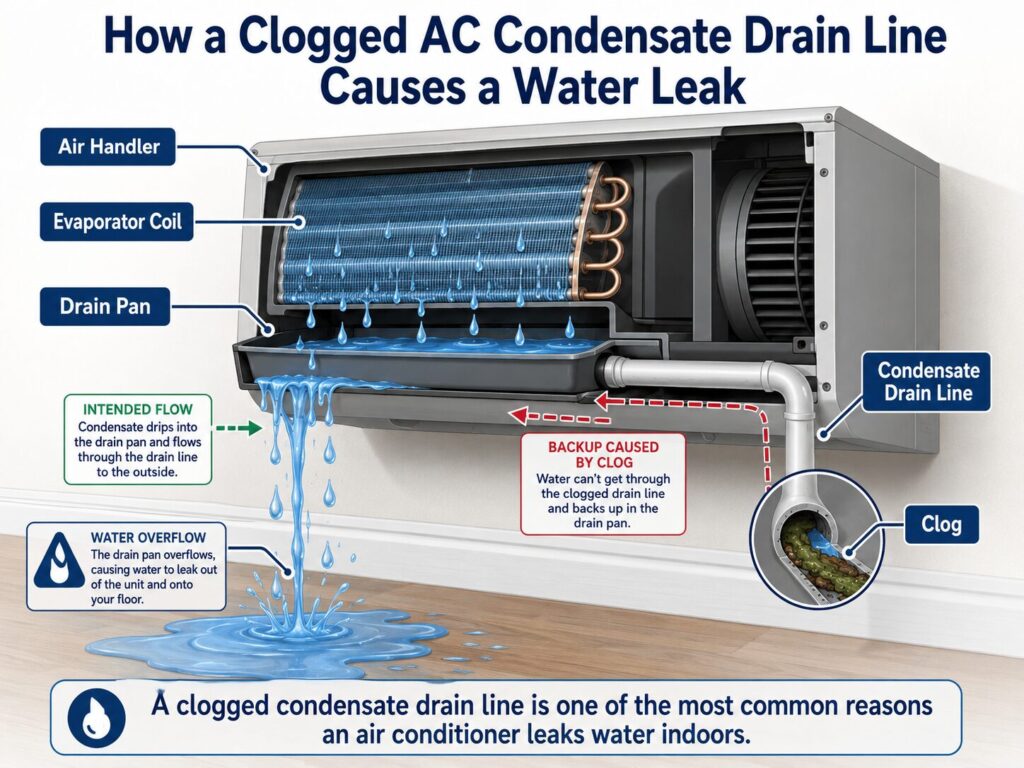
Yes, a small amount of water dripping from an air conditioner can be normal, especially during hot or humid weather. As warm indoor air passes over the cold evaporator coil, moisture in the air condenses into water. That water should collect in the drain pan and flow safely through the condensate drain line.
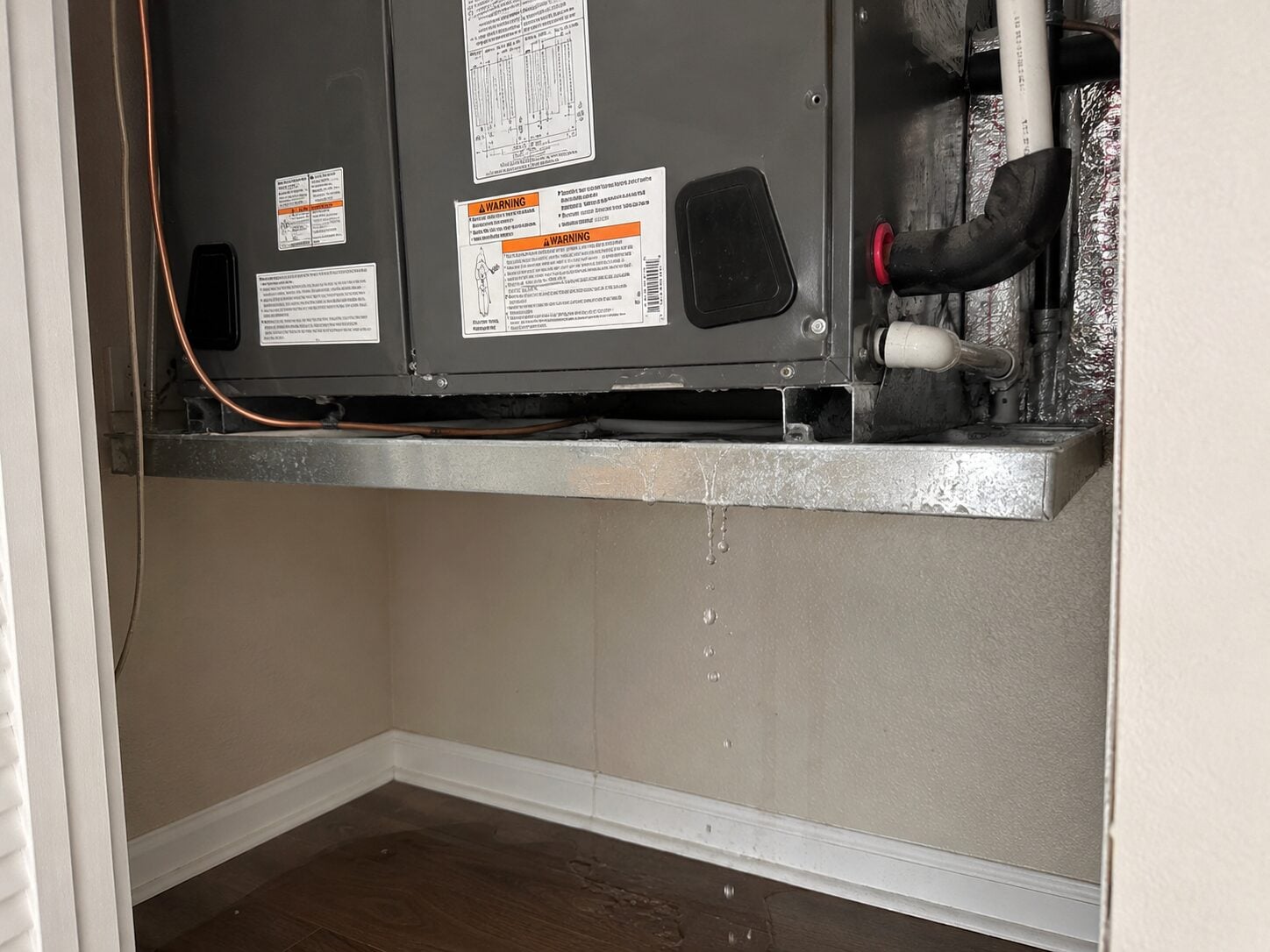
However, water leaking inside the home, dripping from the air handler, pooling around the unit, or causing ceiling stains is not normal. If you see active water damage or a growing puddle, turn the system off and inspect the issue before continuing to run the AC.
Contact Us Today for Fast Service
Common Reasons Your AC Is Leaking Water
-
Clogged Condensate Drain Line
A clogged condensate drain line is one of the most common reasons an air conditioner leaks water. The drain line carries condensation away from the indoor unit. Over time, dirt, algae, dust, and debris can build up inside the line and block water flow.
When the line is clogged, water backs up into the drain pan and may overflow around the air handler, furnace, ceiling, or floor. Signs of a clogged AC drain line include standing water near the indoor unit, musty odors, water around the drain pan, or an AC system that shuts off because the safety switch has been triggered.
-
Dirty Air Filter
A dirty air filter can restrict airflow across the evaporator coil. When airflow is reduced, the coil can get too cold and freeze. Once the ice melts, the drain pan may not be able to handle the extra water, causing the AC to leak.
Check your filter first if your AC is dripping water and airflow feels weak. Replacing a dirty filter is one of the simplest ways to protect your system, improve airflow, and reduce the chance of leaks.
-
Frozen Evaporator Coil
A frozen evaporator coil can cause water to drip or pour from the AC once the ice begins to thaw. Frozen coils are commonly caused by dirty filters, blocked return vents, dirty coils, blower motor problems, or low refrigerant.
If you see ice on the refrigerant lines or indoor coil, turn off the cooling mode and let the system thaw. Do not keep running the AC while the coil is frozen. If the coil freezes again after changing the filter and restoring airflow, call an HVAC technician.
-
Low Refrigerant
Low refrigerant can reduce pressure in the system and cause the evaporator coil to freeze. When that ice melts, it can overflow the drain pan and look like a water leak. Low refrigerant is not something that should simply be “topped off.” It usually means there is a refrigerant leak that needs to be found and repaired.
Signs of low refrigerant may include warm air from the vents, hissing sounds, ice on the refrigerant line, longer cooling cycles, and higher energy bills.
-
Cracked, Rusted, or Overflowing Drain Pan
The drain pan sits under the evaporator coil and collects condensation. If the pan is cracked, rusted, misaligned, or full of standing water, the AC may leak around the indoor unit.
Drain pan problems are more common on older air conditioning systems. If the pan is damaged, it may need to be repaired or replaced to stop the water leak.
-
Disconnected or Damaged Drain Line
Sometimes the condensate drain line is not clogged; it is disconnected, cracked, loose, or improperly sloped. If the line is not connected correctly, water may leak near the air handler instead of draining outside.
This can happen after service work, installation, attic access, vibration, or general wear over time.
-
Malfunctioning Condensate Pump
Some AC systems use a condensate pump to move water away from the unit, especially when gravity drainage is not possible. If the pump fails, loses power, or becomes clogged, water can back up and overflow.
A condensate pump issue may cause water around the indoor unit, a full pump reservoir, or repeated AC shutoffs.
-
Dirty Evaporator Coils
When evaporator coils are covered in dust and grime, they cannot absorb heat properly. This can contribute to freezing, excess condensation, poor cooling, and water leaks.
Dirty coils are usually a maintenance issue and should be cleaned carefully by a professional to avoid damaging the coil fins or refrigerant components.
-
Improper AC Installation
If the AC system, air handler, or drain line was installed incorrectly, water may not flow into the drain pan or out through the drain line properly. A unit that is not level, a poorly sloped drain line, or missing safety components can all lead to leaking water.
Improper installation can also cause long-term performance and efficiency problems, so repeated leaks should be professionally inspected.
-
High Humidity or Excess Condensation
During humid weather, your air conditioner removes more moisture from the air. Some extra condensation is normal, but too much water can overwhelm a poorly draining system. If your AC is leaking during humid weather, the underlying issue may still be a clogged drain line, dirty filter, oversized system, or drainage problem.
What To Do If Your Air Conditioner Is Leaking Water
If your AC is leaking water, take these steps:
- Turn off the AC at the thermostat to prevent more water from forming.
- Turn off power to the unit if water is near electrical components.
- Clean up standing water to reduce the risk of flooring, ceiling, drywall, or mold damage.
- Check and replace the air filter if it is dirty.
- Look for ice on the evaporator coil or refrigerant lines.
- Check the drain pan for standing water, rust, cracks, or overflow.
- Look at the condensate drain line for visible clogs, disconnections, or damage.
- Call an HVAC technician if the leak continues, the coil is frozen, the drain line is clogged, or you suspect low refrigerant.
Can I Still Use My AC If It Is Leaking Water?
It is best to turn the AC off until you know where the water is coming from. Running a leaking AC can make water damage worse and may cause additional system problems. If the leak is caused by frozen coils, low refrigerant, or drainage failure, continuing to run the system can increase repair costs.
Why Is My AC Leaking Water Inside the House?
An AC leaking water inside the house usually means condensation is not draining correctly. Common causes include a clogged condensate drain line, cracked drain pan, frozen evaporator coil, disconnected drain line, or failed condensate pump.
Indoor leaks should be handled quickly because water can damage ceilings, walls, floors, insulation, and nearby electrical components.
Why Is My AC Dripping Water Outside?
Some water dripping outside from the condensate drain line is normal. In fact, it often means your AC is removing humidity and draining properly. But if there is excessive water around the outdoor unit, water dripping from an unusual location, or ice on the refrigerant line, the system should be inspected.
Is AC Water Dangerous?
Condensation from an air conditioner is usually not dangerous by itself, but standing water can create problems. Water leaks can damage building materials, encourage mold or mildew growth, and become risky if moisture reaches electrical parts. If water is leaking near wiring, switches, outlets, the furnace, or the air handler, turn the system off and call a professional.
How To Prevent Air Conditioner Water Leaks
routine heating and cooling maintenance is the best way to prevent AC water leaks. To reduce the risk of future problems:
- Replace air filters regularly
- Schedule professional AC maintenance before cooling season
- Keep return vents open and unblocked
- Have the condensate drain line inspected and cleaned
- Keep the area around the indoor unit clear
- Watch for water stains, musty odors, or recurring drain pan water
- Repair refrigerant leaks instead of ignoring frozen coils
- Ask about a float switch or water safety shutoff if your system is in an attic or closet
When To Call an HVAC Technician
Call a professional if your AC continues leaking after replacing the filter, the condensate drain line appears clogged, the drain pan is damaged, the evaporator coil is frozen, the system is blowing warm air, or you suspect a refrigerant leak.
A technician can inspect the drain line, drain pan, coil, refrigerant level, condensate pump, and airflow to find the true cause of the leak and repair it safely.
professional AC repair, Call Now.
FAQs About an Air Conditioner Leaking Water
Why is my air conditioner leaking water?
The most common causes are a clogged condensate drain line, dirty air filter, frozen evaporator coil, low refrigerant, damaged drain pan, disconnected drain line, or condensate pump failure.
How do I stop my AC from leaking water?
Start by turning off the AC, cleaning up standing water, replacing a dirty filter, checking for ice, and inspecting the drain pan and drain line. If the leak continues, call an HVAC technician.
Why is my air handler dripping water?
An air handler dripping water usually means condensation is overflowing because of a clogged drain line, frozen coil, cracked drain pan, or drainage problem.
Why is my central AC dripping water?
Central AC systems create condensation during normal cooling. If that water is leaking instead of draining, the most likely causes are a clogged condensate drain, dirty filter, frozen coil, or damaged drain pan.
Is it bad if my AC is dripping water?
A small amount of water from the outdoor drain line can be normal. Water leaking indoors, dripping from the air handler, or pooling around the system is a problem and should be checked.
Can a dirty air filter cause AC water leaks?
Yes. A dirty filter restricts airflow and can cause the evaporator coil to freeze. When the ice melts, the drain pan can overflow and make it look like the AC is leaking.
Is AC condensation normal?
Yes. Condensation is a normal part of the cooling process. The issue is not the condensation itself; the issue is when the water cannot drain properly.
Should I turn off my AC if it is leaking water?
Yes. Turn the system off to reduce the risk of water damage and prevent the AC from creating more condensation until the cause is identified.