
If you’re asking how long a water heater lasts, you’re probably trying to avoid a cold shower—or a costly surprise.
The short answer is:
- Traditional tank water heaters last about 8–12 years
- Tankless water heaters can last 15–20 years or more
But that range doesn’t tell the whole story.
Some water heaters fail in as little as 6–7 years, while others keep running well past 15. The difference comes down to how the system is used, maintained, and installed.
In this guide, we’ll break down:
- What actually determines lifespan
- How to spot early warning signs
- Ways to extend your system’s life
- When it’s smarter to replace instead of repair
For professional help, learn more about our water heater repair and replacement.
For professional help, learn more about our residential plumbing repair service.
For professional help, learn more about our urgent help for a plumbing leak.
Average Lifespan of a Water Heater
Not all water heaters age the same way. The type of system you have is the biggest factor.
Traditional Tank Water Heaters
- Average lifespan: 8–12 years
- With excellent maintenance: up to 15 years
- Most common in residential homes
These systems store and heat water continuously, which means the tank is constantly exposed to:
- Heat
- Pressure
- Mineral buildup
Over time, that leads to wear, corrosion, and eventually failure.
Tankless Water Heaters 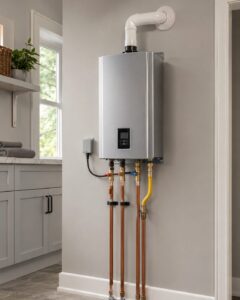
- Average lifespan: 15–20+ years
- Some systems last even longer with proper care
Because they don’t store water, tankless units:
- Avoid internal rust from standing water
- Experience less structural stress
- Are generally more durable in the long term
However, they still require maintenance—especially in areas with hard water.
What Affects How Long a Water Heater Lasts?
Two identical water heaters installed on the same day can fail years apart. Here’s why:
-
Water Quality (Biggest Factor)
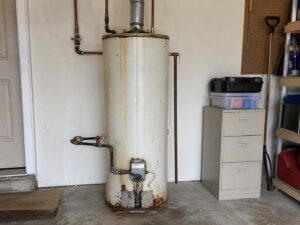
Hard water contains minerals like calcium and magnesium. Over time, these minerals settle at the bottom of the tank and form sediment.
This causes:
-
- Reduced heating efficiency
- Increased wear on components
- Overheating of the tank bottom
Eventually, the tank can crack or fail from stress.
-
Maintenance Habits
Water heaters aren’t “set it and forget it” appliances—but many homeowners treat them that way.
Without maintenance:
-
- Sediment builds up
- Heating elements wear out faster
- Efficiency drops significantly
With regular maintenance, you can extend the lifespan by several years.
-
Installation Quality
Improper installation can shorten a water heater’s life from day one.
Common issues include:
-
- Incorrect pressure settings
- Poor venting
- Improper pipe connections
These problems may not show up immediately, but they can cause long-term damage.
-
Usage & Household Size
The more hot water your household uses, the harder your system has to work.
High usage leads to:
-
- Faster component wear
- Increased heating cycles
- Shorter overall lifespan
A system sized too small for the home will wear out even faster.
-
Type of Water Heater
Tank systems:
-
- More prone to rust and leaks
- Requires more maintenance
Tankless systems:
-
- Longer lifespan
- More efficient
- Still requires descaling and upkeep
Signs Your Water Heater Is Going Bad
Water heaters rarely fail without warning. If you know what to look for, you can avoid a full breakdown.
-
Age Over 10 Years
If your tank water heater is over 10 years old, it’s approaching the end of its expected life.
Even if it’s still working, the failure risk increases significantly.
-
Rusty or Discolored Water
If your hot water looks brown or reddish, it could mean:
-
- Internal tank corrosion
- Failing anode rod
Once corrosion starts inside the tank, replacement is usually the only solution.
-
Strange Noises
Popping, banging, or rumbling sounds are caused by sediment hardening at the bottom of the tank.
This leads to:
-
- Reduced efficiency
- Overheating
- Increased stress on the tank
-
Leaks Around the Unit
Small leaks often turn into major failures quickly.
If you notice water pooling around the base:
-
- The tank may be cracking
- Internal pressure damage may be occurring
-
- Inconsistent or Insufficient Hot Water
If your water heater struggles to keep up:
-
- Heating elements may be failing
- Sediment may be reducing the capacity
How to Make Your Water Heater Last Longer
You can significantly extend your system’s lifespan with a few simple steps.
Flush the Tank Once a Year
This removes sediment buildup and keeps the system running efficiently.
Skipping this step is one of the fastest ways to shorten lifespan.
Replace the Anode Rod
The anode rod protects the tank from rust by attracting corrosive elements.
Replacing it every 3–5 years can:
-
- Prevent internal corrosion
- Extend tank life significantly
Lower the Temperature Setting
Keeping your water heater at 120°F instead of higher:
-
- Reduces wear
- Saves energy
- Slows mineral buildup
Install a Water Softener
If you have hard water, this is one of the best investments you can make.
If it:
-
- Reduces sediment buildup
- Improves efficiency
- Extends lifespan
Schedule Regular Inspections
A professional inspection can catch:
- early leaks
- worn components
- pressure issues
Before they turn into major problems.
When Should You Replace Your Water Heater?
A lot of homeowners wait until their system completely fails—but that’s usually the worst time to act.
Replace Instead of Repair If:
- The unit is over 10–12 years old
- Repairs are becoming frequent
- Efficiency has dropped significantly
- You’re seeing rust or leaks
Why Early Replacement Is Smarter
- Avoids emergency breakdowns
- Prevents water damage
- Improves energy efficiency
- Saves money long-term
Tank vs Tankless: Lifespan Comparison
| Feature | Tank Water Heater | Tankless Water Heater |
| Lifespan | 8–12 years | 15–20+ years |
| Maintenance | Moderate | Moderate |
| Efficiency | Lower | Higher |
| Upfront Cost | Lower | Higher |
| Long-Term Value | Moderate | High |
Tankless systems last longer, but they’re not always necessary. The right choice depends on your home, budget, and usage.
FAQs
Can a water heater last 20 years?
Yes—but it’s rare for tank systems. Tankless systems are much more likely to reach or exceed 20 years.
How do I know how old my water heater is?
Check the serial number on the unit. Most manufacturers encode the manufacturing date into it.
Is it worth repairing an old water heater?
If it’s nearing the end of its lifespan, repairs are usually temporary fixes. Replacement is often more cost-effective.
What causes water heaters to fail early?
The most common causes are:
-
- Lack of maintenance
- Hard water buildup
- Poor installation
- Heavy usage
Final Thoughts
So, how long do water heaters last?
- Tank systems: 8–12 years
- Tankless systems: 15–20+ years
But those numbers aren’t guarantees—they’re averages.
The real lifespan depends on how well the system is maintained and the conditions it operates in.
If your water heater is getting older or showing signs of wear, it’s better to plan than deal with an unexpected failure.
If you’re not sure how much life your water heater has left, having it inspected can save you from a costly surprise.