
Furnace Installation in Modesto, CA
A new furnace should fit your home, your comfort needs, and the way your heating system actually operates. Derek Sawyer’s Cooling, Heating & Plumbing provides professional residential furnace installation in Modesto, California, for homeowners replacing existing equipment or planning a new heating installation. Our team evaluates the system requirements, explains appropriate options, and installs the selected equipment with attention to airflow, connections, controls, and startup.
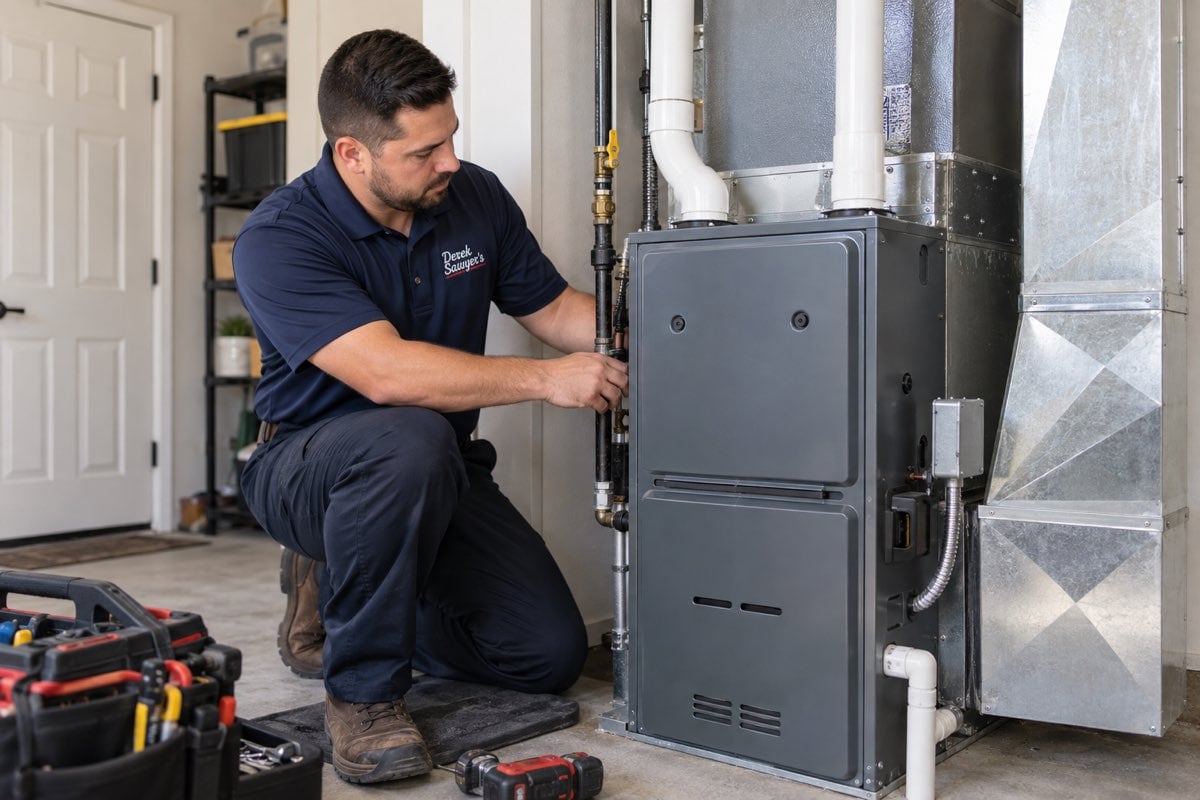
Professional Furnace Installation for Modesto Homes
Furnace installation involves more than exchanging one cabinet for another. The equipment must be appropriate for the home’s heating load, fuel and electrical service, available installation space, duct system, airflow needs, thermostat, venting, and drainage requirements. These details influence how comfortably and reliably the system can operate.
Before a new furnace installation, the existing system and accessible installation conditions should be reviewed. A furnace installer may need to consider equipment orientation, return and supply air paths, filter access, control compatibility, clearances, and the condition of related connections. The recommended solution should reflect the home rather than assuming every Modesto property needs the same furnace.
Signs It May Be Time for a New Furnace
A single breakdown does not automatically mean a furnace needs replacement. The full condition and service history matter. Homeowners may want to discuss furnace replacement when one or more of these issues becomes persistent:
- Repairs are becoming frequent. Repeated failures can indicate that multiple components are reaching the end of practical service.
- Heating is inconsistent. Rooms that remain uncomfortable may point to equipment, airflow, duct, control, or sizing concerns.
- The furnace cycles excessively. Frequent starts and stops can result from several conditions, including equipment that is not well matched to the home.
- The system struggles to maintain the thermostat setting. Declining performance deserves evaluation before another heating season.
- A major component has failed. The cost and availability of the part should be considered alongside the furnace’s overall condition.
- The equipment has become unreliable. An unpredictable system may no longer provide the confidence the household needs.
- Replacement parts are difficult to obtain. Limited parts availability can change the practical value of another repair.
- The existing furnace does not fit the home’s needs. Poor sizing, changes to the house, or long-standing comfort problems may justify a broader system evaluation.
Equipment age is useful context, but it is not an automatic replacement rule. Repair history, current condition, performance, available parts, safety, comfort, and the homeowner’s plans should all inform the decision.
Choosing the Right Furnace
Correct Furnace Sizing
Bigger is not automatically better. An oversized furnace may satisfy the thermostat quickly but short cycle, create noticeable temperature swings, and provide less consistent comfort. An undersized furnace may run for long periods and still struggle to maintain the desired temperature. Appropriate sizing considers the home’s actual heating requirements rather than relying only on the capacity of the old equipment.
Home Characteristics
Square footage is only one input. Insulation, windows, air leakage, ceiling height, layout, orientation, local climate, existing ductwork, airflow, and comfort preferences can all affect the system selection. A home that has been remodeled or weatherized may have different needs than it did when the previous furnace was installed.
Furnace Efficiency and AFUE
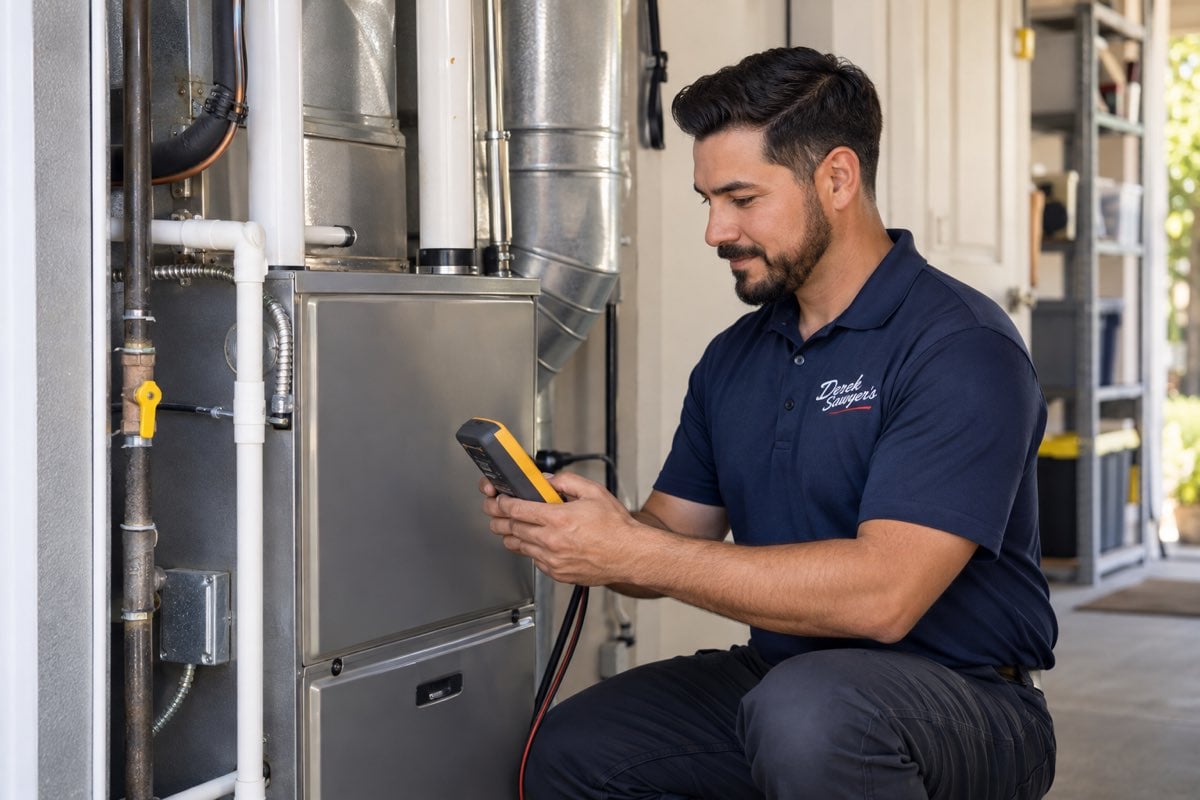
Annual Fuel Utilization Efficiency, or AFUE, describes how much of a furnace’s fuel is converted into usable heat over a typical season. A higher AFUE indicates that less fuel energy is lost during operation. AFUE is important, but it is not the only selection factor. Equipment cost, venting requirements, the home’s heating demand, installation conditions, and long-term plans also deserve consideration. No efficiency rating by itself can promise a specific utility bill or savings amount.
Existing Ductwork and Airflow
Even a properly selected high-efficiency furnace can perform poorly when the air distribution system has major restrictions, leakage, or sizing problems. Accessible ducts, transitions, returns, registers, and filter arrangements should be considered during installation planning. The goal is not to turn every project into a duct replacement, but to avoid connecting new equipment to an obvious airflow problem without discussing it.
Fuel, Venting, Controls, and Installation Space
Gas furnace installation may require compatible gas, combustion-air, and venting arrangements. Electrical service, condensate management where applicable, thermostat wiring, equipment clearances, and service access also influence the project. These practical requirements help determine which options can be installed correctly in the available space.
What Happens During Furnace Installation?
- Evaluate the existing heating system. The furnace, thermostat, accessible duct connections, installation area, utilities, and related conditions are reviewed.
- Discuss comfort needs. The homeowner can explain temperature concerns, equipment history, household preferences, and plans for the home.
- Review appropriate furnace options. Equipment type, efficiency, features, compatibility, and installation requirements are considered.
- Verify sizing and project requirements. The team evaluates the information needed to match the furnace to the home and prepare for the installation.
- Prepare the work area. Access is established and surfaces are protected as appropriate for the project.
- Remove existing equipment when applicable. The old furnace is disconnected and removed so the installation area and connections can be prepared.
- Set and connect the new furnace. Duct, electrical, fuel, venting, drainage, thermostat, and control connections are completed as applicable to the selected equipment.
- Start and test the system. The heating sequence, controls, safety functions, and equipment operation are checked.
- Verify airflow and comfort operation. Accessible airflow conditions and system response are reviewed to confirm that the installation is operating as intended.
- Review thermostat and basic care. The homeowner receives guidance on normal operation, filter attention, and appropriate maintenance steps.
The exact work and timing depend on the equipment, existing system, accessibility, ductwork, utilities, venting, and whether modifications are necessary. A straightforward replacement and a project that requires system changes should not be assumed to follow the same schedule.
Why Proper Furnace Installation Matters
Installation quality affects the way a furnace delivers heat from its first cycle. Equipment that is correctly selected, connected, configured, and commissioned has a better opportunity to provide steady comfort and operate as designed. Poor airflow, incorrect controls, unsuitable venting, or mismatched equipment can undermine the performance of a new furnace.
Careful installation also supports safe operation, service access, reliability, and equipment longevity. It cannot guarantee a particular lifespan or energy savings, but it helps avoid preventable problems caused by setup and connection errors.
Furnace Installation vs. Furnace Replacement
Furnace installation is the broader term for placing and commissioning heating equipment in a home that needs a new system. Furnace replacement usually means removing an existing furnace and installing another in its place. Many Modesto projects involve furnace replacement and installation together, but a home’s current equipment and layout determine the actual scope.
This page addresses both needs while keeping the focus on choosing and installing a new furnace. Homeowners planning additions, system changes, or replacement of unreliable equipment can begin with an installation consultation.
Repair or Replace Your Furnace?
Repair may make sense when the problem is isolated, the needed part is available, and the rest of the furnace remains in reasonable condition. Replacement may deserve consideration when major failures occur, repairs are becoming frequent, comfort remains poor, performance has declined, parts are difficult to obtain, or the equipment no longer fits the home’s needs.
There is no single age or cost formula that answers every situation. A diagnosis provides the information needed to compare the choices. If your current system may still be a repair candidate, learn more about furnace repair in Modesto. For a broader overview of the company’s heating work, visit heating services in Modesto.
Furnace Installation for Modesto’s Cooler Weather
Modesto does not experience the severe winters found in colder regions, but cool mornings, overnight temperature drops, and seasonal cold spells still make dependable heating important. A properly planned furnace should respond comfortably during those periods without being selected for an exaggerated climate.
Central Valley homes vary in age, insulation, duct design, additions, and air sealing. Those differences matter more than repeatedly inserting a city name into an equipment recommendation. Local installation planning should reflect how the individual home holds and distributes heat.
Why Choose Derek Sawyer’s for Furnace Installation?
Derek Sawyer’s Cooling, Heating & Plumbing has served the Central Valley for more than 20 years. The company identifies a team of trained professionals, and its employees are background-checked and drug tested. Homeowners also have access to extended service hours seven days a week, from 7 a.m. to 8 p.m.
The installation process should give a homeowner enough information to understand the proposed equipment and the work required. Derek Sawyer’s can evaluate the project, discuss appropriate options, and explain the next steps before authorized work begins. After installation, ongoing HVAC maintenance can help support normal operation, while the company’s current financing information is available for homeowners who want to review applicable payment options without assuming that every project qualifies.
What Modesto Homeowners Say About Derek Sawyer’s
Read current Google feedback from Derek Sawyer’s customers through the site’s live Trustindex review widget.




Furnace Installation FAQs
How do I know when I need a new furnace?
Consider an installation consultation when repairs are becoming frequent, a major component has failed, comfort remains inconsistent, parts are difficult to obtain, or the equipment no longer suits the home’s needs. Age is useful context, but the system’s condition, performance, and repair history matter too.
How is the correct furnace size determined?
Appropriate sizing considers the home’s heating load and characteristics such as square footage, insulation, windows, air leakage, layout, local climate, ductwork, and airflow. Replacing the old furnace with the same capacity is not always the right answer.
What does AFUE mean?
AFUE stands for Annual Fuel Utilization Efficiency. It describes the percentage of fuel energy a furnace converts into usable heat over a typical season. A higher AFUE indicates less fuel energy is lost, but it does not guarantee a specific utility savings amount.
Can my existing ductwork be used with a new furnace?
Existing ducts may be usable when they are compatible with the new system and can provide appropriate airflow. Significant leakage, restrictions, damage, or sizing problems may need to be addressed so the new furnace can operate properly.
How long does furnace installation typically take?
Timing depends on the selected equipment, the existing system, accessibility, ductwork, electrical or fuel requirements, venting, drainage, and any modifications the project needs. The installation should be evaluated before assuming a specific completion time.
Should I repair or replace my furnace?
Repair may be practical for an isolated problem when parts are available and the remaining system is in reasonable condition. Replacement deserves consideration when failures are severe or recurring, comfort remains poor, parts are scarce, or the equipment no longer fits the home.
What happens during a furnace installation?
The process generally includes evaluating the home and existing system, selecting appropriate equipment, preparing the installation area, removing old equipment when applicable, completing required connections, starting and testing the furnace, verifying operation, and reviewing controls with the homeowner.
Do you install furnaces in Modesto, CA?
Yes. Derek Sawyer’s Cooling, Heating & Plumbing provides residential furnace installation and replacement for homeowners in Modesto, California.
What should I do after a new furnace is installed?
Learn the thermostat settings and filter requirements, keep supply and return openings clear, report unusual operation, and follow the equipment’s recommended maintenance guidance. Scheduling routine HVAC maintenance can help identify developing issues.
Schedule Furnace Installation in Modesto
If you are planning a new furnace installation or replacing existing heating equipment, request an installation consultation with Derek Sawyer’s. Call (209) 266-8682 or use the existing scheduling page to discuss the next step for your Modesto home.